How Kingdom-Centered Prayer Fuels Humility, Unity, and a Credible Christian Witness
When Humble Hearts Pray, the Kingdom Advances
In a polarized age and a culture where more neighbors describe themselves as spiritually curious but religiously unaffiliated, Jesus’ words re-center us: “Your kingdom come, your will be done, on earth as it is in heaven.” (Matthew 6:10) That kingdom-centered prayer is not a slogan; it’s a summons. To pray it is to bend our lives under Christ’s reign—the rule of the King who has come and will come again.
If you find this post helpful, please support these ministry efforts by buying a copy of my book: The Bible Made Simple and Easy: Book‑by‑Book Summaries of All 66 Books with Visual Aids and Key Verses. Available in the shop and on Amazon. Get your copy today!
What We Mean by “Kingdom”: God’s Present and Coming Rule
Scripture frames the kingdom not as a place we invent but as God’s active sovereignty in and over all things. Jesus declared the kingdom “in your midst” (Luke 17:21) and described its present life as “righteousness, peace, and joy in the Holy Spirit” (Romans 14:17). And yet, we still await the visible, public return of Christ, when every knee will bow and every enemy will be put under His feet. This is the kingdom’s “already/not-yet”—it is here in seed and power, and it is coming in fullness and glory.
So when we offer kingdom-centered prayer, “Thy kingdom come,” we are aligning our hearts, our churches, and our ministries with the King’s agenda. We’re asking for the gospel of the kingdom to run swiftly, for the Spirit to transform hearts, and for our public witness to look like heaven’s future breaking into today’s headlines.
Kingdom Posture: Humility That Heals and Builds
If kingdom-centered prayer sets our direction, humility is how we walk the path. The apostle Paul commands, “Do nothing from selfish ambition or conceit, but in humility count others more significant than yourselves” (Philippians 2:3). That’s not self-loathing; it’s a grace-filled servant posture, the mentality of a bondservant whose joy is to edify others for the sake of church unity and mission.
How do we learn that posture? By honest self-examination before God. Paul’s gospel-shaped sobriety—“Christ Jesus came into the world to save sinners, of whom I am the foremost”—creates a heart that can honor and respect others (1 Timothy 1:15). The same Paul confessed his unworthiness (1 Corinthians 15:9) and wrestled honestly with indwelling sin (Romans 7). That realism anchors humility of mind and frees us to outdo one another in showing honor.
Consider the peacemaking instincts of Abraham with Lot—yielding the better land to preserve unity and witness (Genesis 13:8–9). Kingdom humility doesn’t clutch privilege; it opens hands to serve. A local church marked by this heart—confessing quickly, forgiving generously, and building up the saints—becomes a preview of Christ’s reign.
Turning Outward: A Compelling Witness to the Spiritually Curious
America’s “religious nones”—those who claim no religious affiliation—now make up nearly three-in-ten adults, many still describing themselves as spiritual and open to meaning, transcendence, and community (Pew Research Center). This is not a dead end; it’s a wide-open mission field.
A church that embodies righteousness, peace, and joy in the Holy Spirit through kingdom-centered prayer is compelling because it is different—both gracious and grounded, principled and hospitable. Jesus’ own pattern included table fellowship with seekers and skeptics (Luke 5:27–32), and His commission sends us into the world with the gospel of the kingdom (Matthew 28:18–20). When humble hearts embrace kingdom-centered prayer for the King’s rule, our evangelism gains credibility and compassion.
Practices That Braid Posture, Prayer, and Purpose
1) Prayer Rhythms That Seek the King’s Rule
- Daily Alignment: Pray the Lord’s Prayer slowly, emphasizing “Your kingdom come” over your heart, home, church, and city. Ask specifically for righteousness, peace, and joy to grow where you live.
- Prayer-Walks: Once a week, walk your neighborhood and intercede by name (where appropriate) for neighbors, schools, small businesses, and community leaders.
- Fasting for Focus: Choose one mealtime a week to fast and pray for Christ’s reign to advance among the spiritually curious in your network.
- Sunday Intercession: Add a “Kingdom Come” moment in gathered worship—brief prayers for missions, local outreach, and unity across congregations.
2) Humility Disciplines That Build Unity
- Self-Examination: Before you speak or post, ask: “How is my own sin showing up here?” Confess quickly to God and, if needed, to others.
- Honor in Action: Each week, intentionally edify someone—write a note, make a call, or serve quietly behind the scenes. Aim to value others above yourself.
- Peacemaking: In disagreements, pursue clarity and charity. Offer to pray with the person. Seek counsel when conflict feels stuck.
- Servant Posture: Take the “less convenient” task at church. Like Abraham with Lot, yield preference to preserve church unity and witness.
3) Missional Habits That Reach the “Nones”
- Listening First: Ask, “What do you mean by ‘spiritual’?” and “Where have you experienced wonder, peace, or guilt?” Respect their story without rushing.
- Hospitality: Open your table. Shared meals lower defenses and invite honest questions—just like Jesus’ pattern of welcome.
- Service: Meet tangible needs—childcare for a single parent, groceries for a neighbor, tutoring a student. Let good works prepare the ground for good news.
- Simple Gospel Sharing: In natural moments, share how Jesus’ rule has brought freedom from guilt and fear, and how the Spirit is growing righteousness, peace, and joy in your life.
- Clear Invitations: Offer next steps: “Would you join me at church?” “Can we read a Gospel together?” “Could I pray for you right now?”
Five-Minute Daily Framework
- Minute 1: Praise the King (name Jesus’ attributes; thank Him for His sovereignty).
- Minute 2: Confess honestly (name and turn from sin you’ve noticed; receive mercy).
- Minute 3: Pray “Thy kingdom come” over one relationship and one neighborhood need.
- Minute 4: Ask for a servant heart to honor one specific person today.
- Minute 5: Intercede for a spiritually curious friend by name; ask for an open door.
Why This Matters Now
Our moment is marked by cultural polarization and spiritual hunger. A fractious church cannot credibly announce the Prince of Peace. But a humble, praying people—anchored in the gospel of the kingdom—become a living signpost of the age to come. Inside the church, humility dissolves factions and strengthens edification. Outside the church, that same posture becomes a bridge toward seekers who are suspicious of institutions but yearning for meaning, forgiveness, and community under a good King.
Anticipation with Our Hands to the Plow
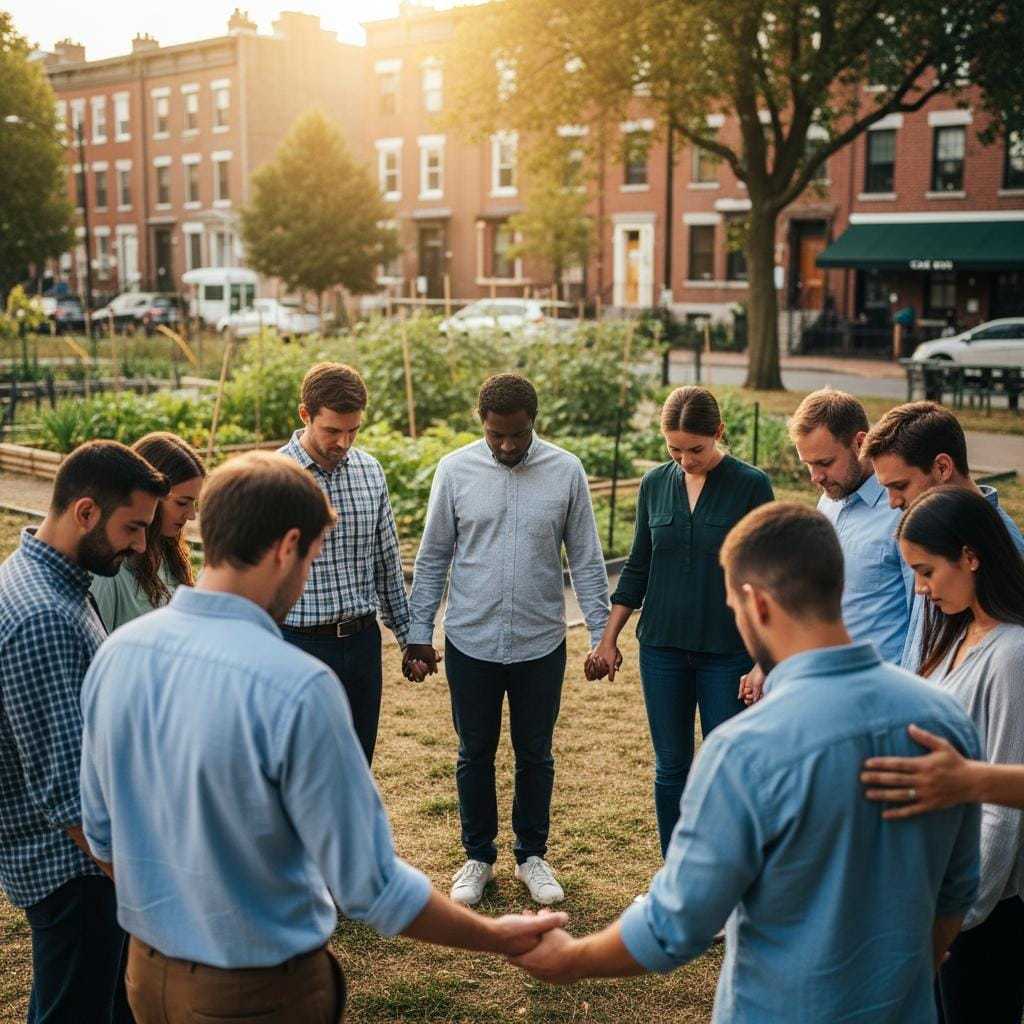
We labor with anticipation. Christ will return; the kingdom will be visible; justice and mercy will prevail. Until then, we pray and we act. We bend low in humility, link arms in unity, and move out in mission, confident that our King delights to answer the kingdom-centered prayer He taught us to pray.
Lord Jesus, let Your kingdom come in our hearts, our homes, our churches, and our cities. Make us servants who honor others, peacemakers who build unity, and witnesses who reach the spiritually curious with the hope of the gospel. Amen.
Further Reading
- The Lord’s Prayer in context: Matthew 6:9–13 (ESV)
- Kingdom life now: Romans 14:17 (ESV)
- Humility in the church: Philippians 2:1–11 (ESV)
- Spiritual curiosity today: Pew Research Center on religious “nones”
Author

Discover more from Elkleaf Publishing
Subscribe to get the latest posts sent to your email.