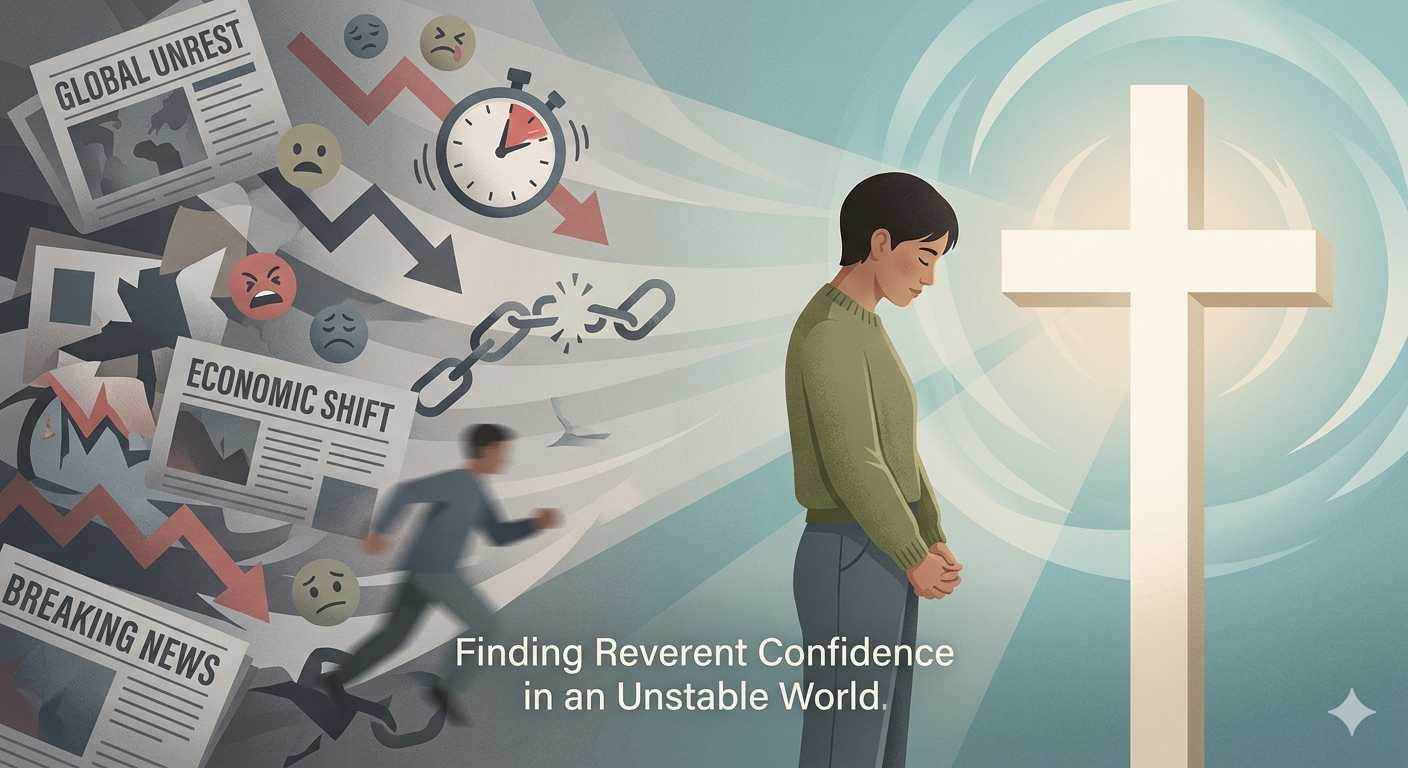
Because Jesus Drank the Cup of Judgment: Enduring with Hope and Mission
The Forgotten Cup and a Waiting World
In a season when headlines shout and timelines refresh by the minute, the table that matters most is often the one we’re prone to overlook. At the Last Supper, Jesus lifted a cup that signaled not comfort but cost—the cup of judgment He would drink down to the dregs for us. Hours later in Gethsemane, He prayed, “My Father, if it be possible, let this cup pass from me. Nevertheless, not as I will, but as you will” (Matthew 26:39).
That cup was not forgotten by heaven. It was the brimming wrath we deserved, poured onto the only Savior who could bear it. He did, fully. God’s righteous judgment fell on Jesus so that God’s lavish mercy could fall on us. The cross is not an inspiring metaphor; it is substitutionary atonement, where wrath is satisfied and redemption is secured (Romans 3:25–26.
If you find this post helpful, please support these ministry efforts by buying a copy of my book: The Bible Made Simple and Easy: Book‑by‑Book Summaries of All 66 Books with Visual Aids and Key Verses. Available in the shop and on Amazon. Get your copy today!
Foundation: Because He Drank the Cup, We Stand with Confidence
Christian confidence does not come from sturdier circumstances but from a sturdier Substitute. Jesus bore the weight we could not lift and drained the penalty we could not survive. The blood of Christ has purchased our salvation, our future is sealed, and our sins are truly forgiven. This is because Jesus drank the cup of judgment in our place.
Even in suffering, Christians can say with quiet certainty, “My life is hidden with Christ in God.” This confidence does not make us complacent; it makes us courageous. If the worst judgment conceivable has already visited our Savior because Jesus drank the cup of judgment for us, then whatever trials visit us now are not punitive but purifying. The cross untangles our fears: in Christ, we are already known, already loved, already secured. That reality births perseverance in the furnace of adversity.
Formation: The Real Legacy—Patient Endurance, Not Spectacle
The modern world often confuses spiritual maturity with platform, polish, or instant results. Scripture directs us otherwise. The hallmark of genuine discipleship is steadfast faith—a life marked by patience, endurance, and faithfulness when pressures mount. The early church did not turn the world upside down with viral stunts but with cruciform perseverance and a long obedience in the same direction.
Hebrews points our gaze to Jesus as the pattern and power for this kind of steady faith: “Let us run with endurance the race that is set before us, looking to Jesus… who for the joy set before him endured the cross” (Hebrews 12:1–3). We do not white-knuckle our way through trials; we walk by the Spirit, rooted in the Word, strengthened by the church, and kept by grace. Over time, this produces resilient Christians whose lives whisper (and sometimes shout): Christ is enough.
So when hardships come—diagnoses, disappointments, cultural hostility—our calling is not theatrics but faithfulness. Patient endurance is not passive; it is a Spirit-empowered, Scripture-fed, community-supported resolve to keep saying yes to Jesus when it would be easier to bow out. Because Jesus drank the cup of judgment, we have Spirit-enabled perseverance for the long road.
Mission: Why God Is Still Waiting—and How We Should Wait
If the cross is our foundation and patience is our formation, then mission is our purpose in the in-between. Many of us ache for Jesus to return—and He will. But Scripture tells us that His seeming delay is not indifference; it is divine patience with a saving purpose. “The Lord is not slow to fulfill his promise… but is patient toward you, not wishing that any should perish, but that all should reach repentance” (2 Peter 3:9).
In other words, God’s clock is running on mercy. This shapes our posture. Because Jesus drank the cup of judgment, we live with urgency, but not anxiety; with compassion, not cynicism. We are ambassadors, not spectators. Our calling remains: proclaim the gospel of salvation, call for repentance, serve our neighbors, and adorn the message with holy lives marked by hope.
Active waiting looks like this:
- Witness with clarity and kindness. Be ready to explain the hope within you—with gentleness and respect (1 Peter 3:15).
- Pray with persistence. Pray for open doors, open hearts, and open mouths. God’s patience today may be someone’s salvation tomorrow.
- Serve with integrity. Let your good works shine in a way that points beyond you to your Father in heaven.
- Endure with joy. Trials will test the metal of your faith; trust that Christ is forging maturity in the fire.
From the Cup to the Clock: A Threefold Lens for Our Moment
Here’s a simple way to hold the big story together in your daily life:
- Past—The Cup: Jesus drank the cup of judgment for us. Result: Our confidence is anchored in His finished work; we are redeemed, not condemned because Jesus drank the cup of judgment.
- Present—The Call: We live in a world where suffering is real. Result: We pursue patience, endurance, and Spirit-enabled faithfulness over spectacle.
- Future—The Clock: Christ’s return is sure, but the Father’s timetable is mercifully delayed. Result: We embrace our mission with compassionate urgency, calling people to repentance and hope.
Practices That Form Enduring Patience and Hope-Filled Urgency
Want to “wait well” while God waits to save? Try these rhythms this week:
- Scripture First, Screen Second. Begin your day in a Gospel passage that fixes your eyes on Christ crucified and risen. Consider reading the Passion narratives found in Matthew 26–27, Mark 14–15, Luke 22–23, and John 13–19
- Pray Through the News. For every troubling story, pray for the people involved by name or region. Ask the Lord to send laborers and to save in His mercy.
- Schedule One Courageous Conversation. Identify someone far from Christ. Ask a caring question. Share a piece of your testimony. Extend an invitation to church or a meal.
- Practice Sabbath-Level Trust. Set aside a weekly block of time to cease striving. Let rest preach to your heart that God’s plan, not your performance, secures the future, because Jesus drank the cup of judgment for you.
- Join a Fellowship on Mission. Get into a small group or service team where perseverance is cultivated and the gospel is shared together.
FAQ: Isn’t Patience Just Passive?
Not in Scripture. Biblical patience is endurance under pressure, fueled by promises, aimed at a purpose. It looks outward in mission and upward in hope. Because Jesus drank the cup of judgment and has already secured our redemption, we’re free to love, forgive, serve, and speak without fear—even when the timeline stretches beyond our comfort. Patience is not inactivity; it is faith at a steady boil.
A Short Prayer for This Waiting Hour
Father, thank You that Jesus drank the cup I could never bear. Anchor my confidence in His cross. Form in me a patient, persevering faith. As You wait in mercy, send me in love—clear in truth, kind in tone, and steadfast in hope—until Christ returns. Amen.
Closing: Confidence to Endure, Compassion to Engage
From the cup to the clock, the story holds: Judgment satisfied. Mercy extended. Mission assigned. Because Jesus drank the cup of judgment and bore our judgment, we can bear today’s trials with confidence and tomorrow’s uncertainties with hope. And because God’s delay is drenched in compassion, we do not waste it—we witness in it.
So take heart. The Savior who drained the cup now fills yours—again and again—with grace for endurance, love for your neighbor, and courage for the long road of faithfulness until the King returns.
Author

Discover more from Elkleaf Publishing
Subscribe to get the latest posts sent to your email.