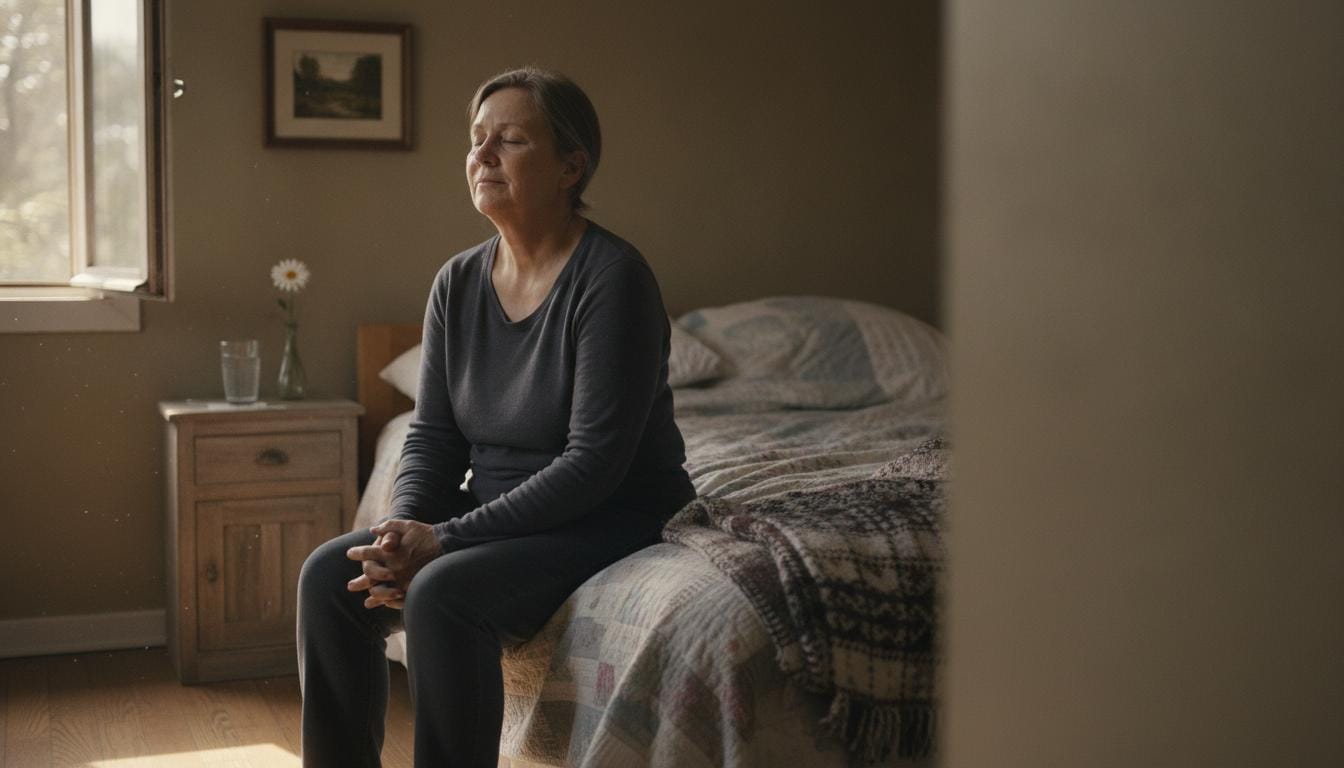
How God Renews You When You Feel Weak
If you are sick, exhausted, grieving, aging, or carrying a weight you can’t seem to set down, here’s the straight answer you need: yes—God can renew you right here, without your circumstances changing first. Weakness is not proof that you’ve failed, God has left, or faith has fizzled. Scripture shows a pattern that feels upside down: while the outer life may strain and fray, the inner life can still be made strong, steady, and quietly alive in Christ.
Can God Renew You When You Feel Weak?
Yes. The New Testament makes a crucial distinction between what is happening to your body and circumstances, and what God is doing within you. The apostle Paul writes that though “our outer self is wasting away, our inner self is being renewed day by day” (2 Corinthians 4:16–18). That isn’t a promise of instant relief. It’s a promise of real renewal—God at work where it ultimately matters—even when pain lingers, energy dips, or capacity shrinks. Paul also learned to boast in weakness because Christ’s power “is made perfect in weakness” (2 Corinthians 12:9–10). Put simply: spiritual strength in weakness isn’t a contradiction in the Christian life; it’s normal grace.
Outward Weakness and Inward Renewal Are Not the Same
“Outer” and “inner” do not compete; they describe different layers of your life. Your “outer” person includes your body, brain chemistry, energy, sleep, mobility, circumstances, and the visible pieces people can assess. The “inner” person is the realm of the heart before God—trust, hope, repentance, comfort, endurance, love.
You may be a caregiver sleeping in snatches, a retiree facing new limitations, a parent bone-tired from another hard night, a believer walking through chemo or chronic pain, or someone whose emotions feel gray and slow. None of that rules out spiritual renewal. Declining capacity is not the same as declining faith. God’s Spirit does not wait for perfect conditions to do inner work. Sometimes the very constraints we never wanted become the place we finally learn dependence, honesty, and hope beyond our own horsepower.
Three Harmful Assumptions to Release
- “If I had more faith, I wouldn’t feel weak.” Scripture never equates strong faith with unbroken stamina. Paul pleaded three times for his thorn to be removed; Jesus wept; the psalmists groaned. Faith often looks like returning to God empty-handed and trusting him with what has not changed.
- “I am useless because I can’t serve like I once did.” Your worth is not your output. When you cannot lift heavy things, God can still build deep things. Bearing witness to Christ through patience, prayerfulness, kindness in pain, or simply receiving help with humility is not “less than”—it is Christlike.
- “God is only working if my condition improves.” Healing and relief are good gifts and worth praying for. But God’s work also includes comfort in affliction, character forged through endurance, repentance from hidden self-reliance, and hope anchored in Christ. These are not consolation prizes; they are renewal.
What Spiritual Renewal Can Look Like in a Hard Season
- Greater dependence on God. Not a vague feeling, but a lived shift: less self-sufficiency, more honest asking, more open-handedness with plans.
- Honest prayer and lament. Bringing your pain, confusion, and even your silence to the Lord. Think of the psalms that say, “How long?” without pretending.
- Endurance and comfort. Staying with what is faithful today, and finding steadying grace enough for this hour—not all of tomorrow at once.
- Repentance. Turning from subtle idols of productivity, control, or image, and returning to God as your portion.
- Renewed hope. Not optimism based on current trends, but a durable expectation that Christ is with you and will keep you.
- Receiving care. Allowing others to serve you can be part of God’s renewal—humbling, yes; demeaning, no. It trains the whole church in love.
Five Faithful Steps When Your Capacity Is Low
Think “small and steady,” not “heroic and instant.” Choose what fits your actual energy, pain level, and bandwidth today.
- Tell God the truth about the burden. You don’t need a perfect speech. Try this simple prayer: “Father, I feel [name it—tired, angry, numb, afraid]. I cannot carry this alone. Be near to me.” If you can manage one verse, whisper it. If you can only manage a sigh, offer that. This is not a performance; it’s relationship.
- Receive grace instead of measuring worth by output. When the to-do list stays undone, say aloud, “My value is received, not earned. Jesus, remind me that your yoke is kind.” Consider one tiny act of rest as a practice of trust: ten slow breaths, a five-minute walk if possible, or lying still without apologizing to yourself.
- Stay connected to trusted believers, where possible. Send a single text asking for prayer. Let a small group know one specific need (a ride, a meal, a listening ear). If speaking is hard, ask someone to pray over you while you sit quietly. Connection doesn’t require a full update—only a doorway.
- Choose one faithful action within your limits. Examples:
- Chronic pain: Read or listen to one psalm. Place a sticky note with a short promise where you rest.
- Exhaustion: Before opening email, pray the Lord’s Prayer slowly. Stop after “give us this day our daily bread” and ask for the literal strength for this morning.
- Limited mobility: Call or message a friend to encourage them with one sentence. Your words can travel where you cannot.
- Caregiving fatigue: Schedule a 15-minute respite window this week and tell someone you trust about it so they can help you keep it.
- Seek appropriate support. Spiritual renewal complements, not replaces, practical help. Talk with a pastor or elder. Consult your doctor about symptoms and treatment. If you’re experiencing persistent despair, anxiety, or intrusive thoughts, reach out to a qualified counselor. Choosing help is not a lack of faith; it’s faithful stewardship of the life God has given you.
What If You Do Not Feel Renewed Yet?
Sometimes you practice these steps and still feel flat. That doesn’t mean you are doing it wrong or that God is disinterested. Renewal often moves at the speed of roots, not fireworks. Here are ways to keep going without slipping into passivity:
- Practice patient honesty, not spiritual denial. Keep telling God the truth. If you feel only a flicker of desire to pray, tell him that too. He can kindle small embers.
- Watch for subtle signs of life. Are your reflexes softening a bit—less snapping, more pausing? Is there a fraction more willingness to ask for help? Do you find a line of Scripture returning to you in the night? Those are quiet evidences of renewal.
- Set a modest rhythm and stick with it. For one month, choose two tiny anchors (for example, a morning verse and a midafternoon check-in with a friend). Let consistency do slow work. Consider journaling two lines a day: “Today felt…” and “God, meet me in…”
- Refuse the false fork between activity and apathy. Patience is not passivity. It’s staying with faithful, proportionate steps while you wait for God to act in his timing. When you can do little, do little faithfully.
- Invite others into your waiting. Ask your church family to hope with you, not just for you. Let them carry the prayers you’re too tired to pray.
Diagnostic questions when you feel stuck
- Am I equating spiritual health with how much I can accomplish?
- Have I quietly assumed God is only at work when I feel strong?
- What one small step would faith take today, given my real limits?
- Whom could I tell the truth to this week?
A Small Next Step for Today
Try this three-line prayer and repeat it whenever your mind spins or your body sags:
Lord, I am weak and weary. Renew me within, even if nothing outside changes today. Teach me to receive your strength and to take the next faithful step. Amen.
Weakness is not the end of your usefulness or the edge of God’s reach. Christ meets you at the limits and holds. Your outer life may not ease overnight. But your inner life is not at the mercy of pain, age, or exhaustion. The God who raised Jesus from the dead can form in you a steadier trust, a quieter courage, and a hope that doesn’t hinge on how you feel this hour. That is real renewal—and it can happen right here, right now, in the midst of weakness.
Author

Discover more from Elkleaf Publishing
Subscribe to get the latest posts sent to your email.