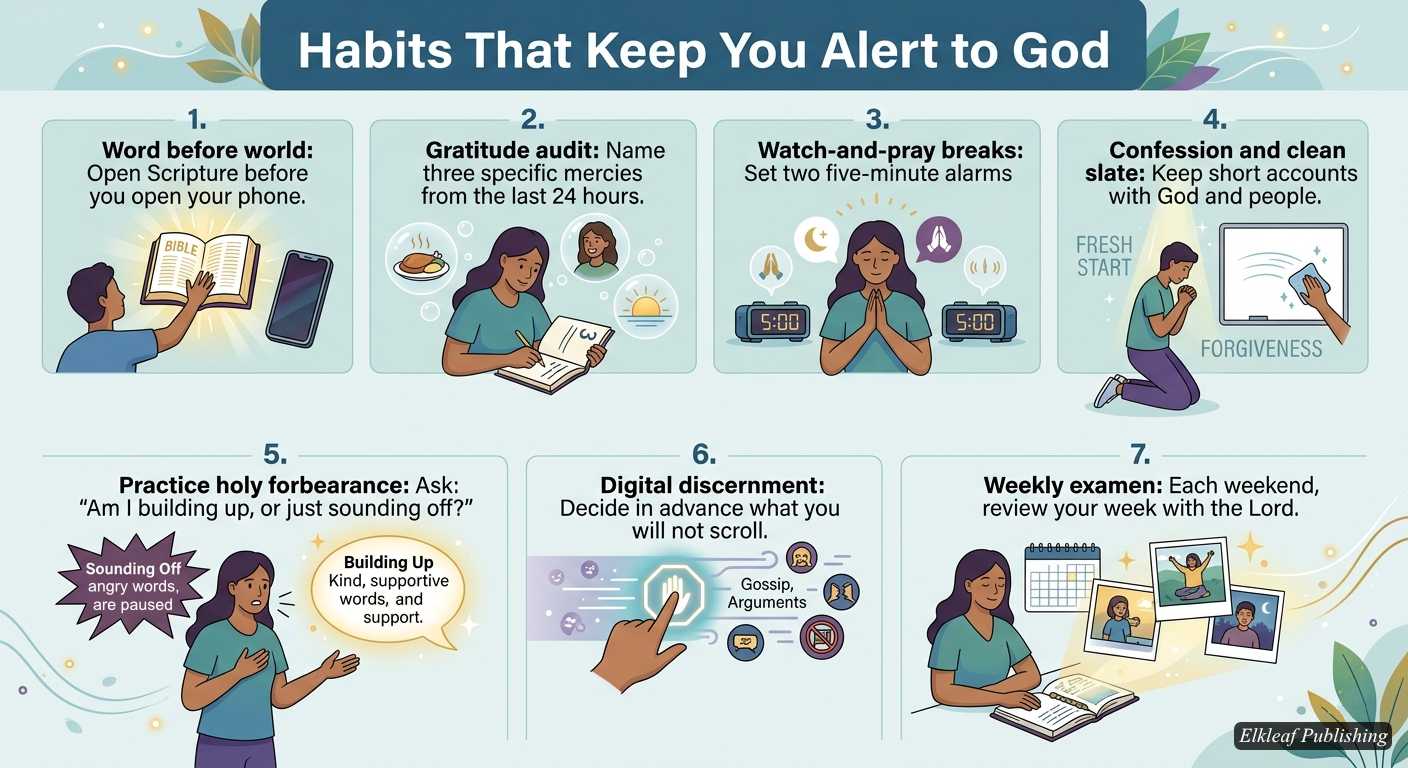
Wrestling, Scripture, and Joy: Essential Prayer Practices for Resilient Faith
If you find this post helpful, please support these ministry efforts by buying a copy of my book: The Bible Made Simple and Easy: Book‑by‑Book Summaries of All 66 Books with Visual Aids and Key Verses. Available in the shop and on Amazon. Get your copy today!
From Wrestling to Rejoicing: Prayer, Scripture, and Joy Beyond Circumstances
Some days, life feels like a tug-of-war with darkness. Bills stack up. Diagnoses arrive. Relationships fray. In those moments, God doesn’t invite us to deny our pain—He invites us to wrestle in prayer and to anchor our minds in Scripture so that our joy is not dependent on our circumstances. Implementing faithful prayer practices provides a foundation for hope and resilience when life feels overwhelming.
Start Where Life Hurts: When Prayer Becomes a Wrestle
In 1 Kings 17, Elijah stretches himself over a dead boy and cries out to God—not once, but three times. It’s a powerful image of persistent intercession, gritty faith, and honest lament that refuses to give up. Elijah does not filter or sanitize his prayer; he brings his grief and hope to the Lord, who alone holds life and death in His hands.
This is what biblical prayer practices look like: not a polished script, but a pleading heart. We persist not because we believe we can change God’s will, but because He is our Father and tells us to ask, seek, and knock. Sometimes the answer is a miracle; sometimes, it’s sustaining grace and perseverance. Either way, the invitation stands—pray without ceasing.
- Wrestle: Keep praying even when emotions falter.
- Intercede: Stand in the gap for those unable to pray for themselves.
- Hold hope: Root your hope in God’s character, not the calendar.
Guardrails for the Soul: Handle Scripture with the Five W’s
If prayer is how we breathe, Scripture is how we see. Paul urges us to be workers “rightly handling the word of truth” (2 Timothy 2:15). In a world of quick takes and half-truths, context and discernment are essential. A faithful approach to prayer practices includes reading with understanding. Use the Five W’s every time you open your Bible:
- What does the passage say? Note key words, repeated phrases, and the genre (story, poetry, letter, prophecy).
- Who wrote it, and to whom? Identify the author, audience, and main characters.
- Why was it written? Look for purpose statements and addressed problems.
- Where does it happen? Consider geography and where it fits in the Bible’s overarching story.
- When in redemptive history? Old or New Covenant? Before or after Christ’s resurrection?
These simple questions build wisdom for your soul. For a deeper dive, explore these trusted resources:
When we read Scripture in context, our prayer practices become aligned with God’s heart and purposes. We learn to desire what God desires, shaping what we request, how we endure, and where we place our hope.
Redefining Happiness: From Happenings to Holiness
Modern culture chases a happiness that is only as stable as the latest news alert. Biblically, joy is not a fleeting feeling—it is a blessedness rooted in God’s unchanging nature. The Beatitudes redefine “the good life” as a life close to God—poor in spirit, pure in heart, peacemaking, persevering. Psalm 1 describes this joy as a tree planted by streams of water, always bearing fruit in due season. In Philippians 4, Paul is content in both abundance and scarcity because his sufficiency is in Christ.
This is the liberating truth: joy is not hostage to circumstances. It flows from trusting a good God who is near and sovereign. Because of the foundation laid by prayer practices rooted in faithfulness, believers can lament and rejoice—grieving what is broken, yet singing because our lives are secure with Christ.
The Tension We Feel—and the Anchor We Need
What happens when the outcome isn’t what we prayed for? Elijah witnessed a miracle; sometimes we do not. That is when sound interpretation and stubborn trust become lifelines. Scripture does not promise every crisis will resolve according to our timeline. It does promise that God is good, near, and working for the good of those who love Him. Handling the Word rightly ensures our faith is anchored in God’s proven character through the cross and the empty tomb.
Emotion and discipline are not adversaries. Honest lament belongs both in the prayer closet and in the pews, while disciplined, contextual reading provides the guardrails that direct our lament toward hope. Both head and heart must travel together, carried by knees bent in prayer practices.
A Weekly Rhythm: Head, Knees, Heart
Here’s a simple plan to cultivate resilient joy through prayer practices:
- Head (Scripture: 20 minutes)
- Pick one passage (e.g., Psalm 1; Matthew 5:1–12; Philippians 4).
- Work through at least three of the Five W’s each day.
- Write one sentence of truth you see and one question you still have.
- Memorize one key verse by Friday.
- Knees (Prayer: 15–20 minutes)
- Wrestle honestly: name your griefs before God.
- Intercede for three names—one family member, one friend, one person far from Christ.
- Ask specifically, persistently, and with hope. Keep a short list of ongoing requests.
- Heart (Joy Practices: 10 minutes)
- List three examples of God’s goodness today, however small.
- Sing or read a psalm of praise or lament (start with Psalm 13).
- End by thanking God for one thing that has never changed: His steadfast love.
Weekly cadence:
- Monday–Thursday: Short, consistent sessions (Head–Knees–Heart).
- Friday: Review notes; share a Scripture insight with someone else.
- Saturday: Take a digital fast (even for an hour); enjoy a prayer walk.
- Sunday: Worship with your local church. Allow the preached Word and congregational prayer to deepen and align your personal prayer practices.
Quick Checklist for Rightly Handling the Word
- Context over clips: Read full paragraphs, not just isolated verses.
- Cross-references: Let Scripture interpret Scripture.
- Christ-centered lens: See how each passage points to Christ and His work.
- Clear over clever: Prefer a plain, straightforward reading over trendy interpretations.
- Church over isolation: Study in community and under faithful leadership.
When Prayer and Scripture Converge, Joy Grows Up
The Christian life is active. We pursue God. We handle His Word. We wrestle in prayer. Through faithful prayer practices, the Holy Spirit grows a joy in us that circumstances cannot steal. Head, formed by truth. Knees, worn by intercession. Heart, steady in blessedness. This is how we move from crisis to confidence—one day, one prayer, one passage at a time.
A Pastoral Prayer
Father, teach our heads to delight in Your truth, our knees to bend in persistent prayer, and our hearts to rest in Your goodness. When circumstances shake us, root us once again in Your Word and in the finished work of Jesus. Make our joy resilient, our hope real, and our love steadfast. In Christ’s name, Amen.
Author

Discover more from Elkleaf Publishing
Subscribe to get the latest posts sent to your email.