Beatitude-Shaped Humility: Why Repentance and Mercy Attract Spiritual Seekers
Why Humility and Repentance Persuade Spiritual Seekers
Beatitude-shaped humility counters the hollow sound of self-assured religion in today’s skeptical world. Amid a culture of bravado and shallow confidence, the church isn’t called to out-shout but to outshine—by embodying the quiet fire of the Beatitudes and the humility of a disciple restored by Jesus.
If you find this post helpful, please support these ministry efforts by buying a copy of my book: The Bible Made Simple and Easy: Book‑by‑Book Summaries of All 66 Books with Visual Aids and Key Verses. Available in the shop and on Amazon. Get your copy today!
From Peter’s Bravado to a Cross-Shaped Credibility
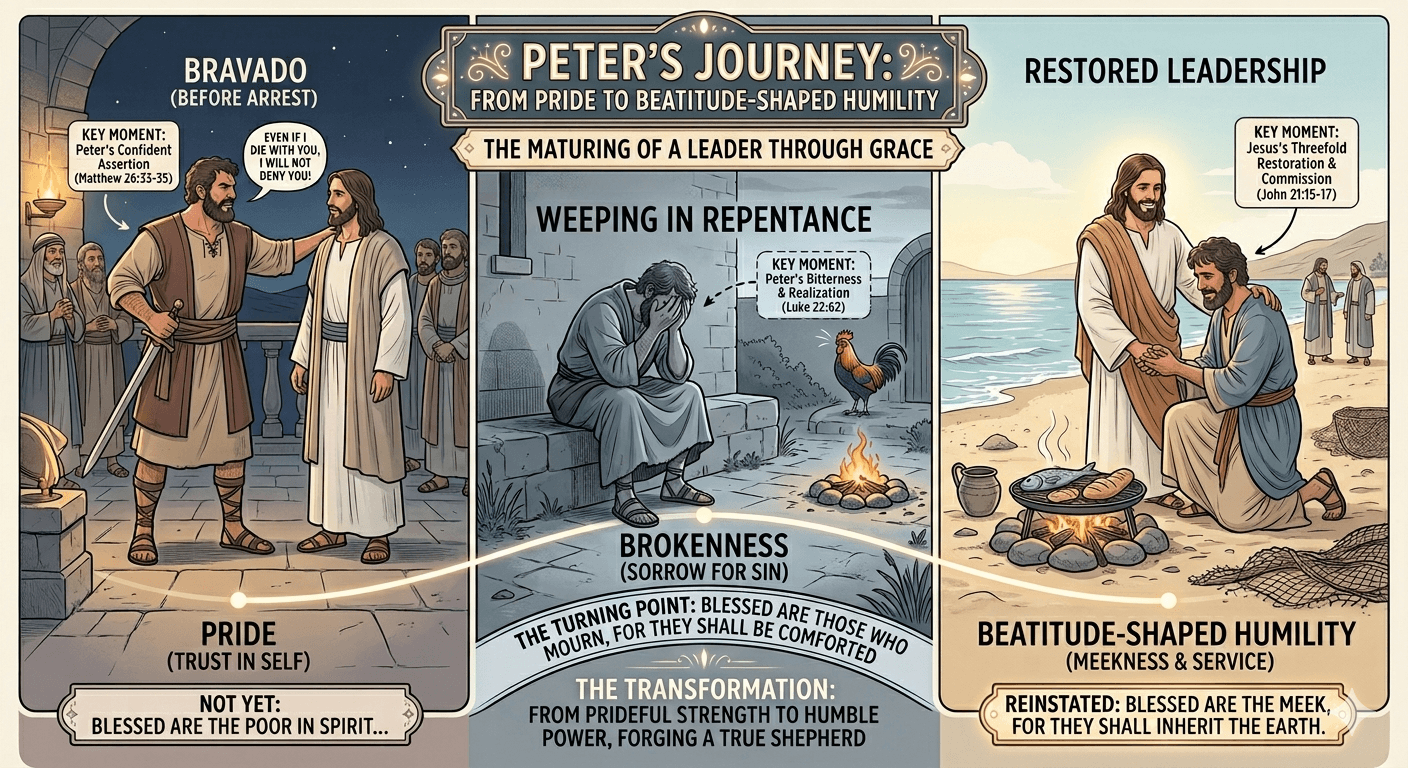
On the night of Jesus’s arrest, Peter declared, even if all others fell away, he would stand firm (Matthew 26:33). Jesus warned him of testing, denial, and ultimately a calling to strengthen others after repentance (Luke 22:31–34).
Peter’s journey speaks volumes for our witness. His impulsive confidence—so relatable—collapsed under pressure, yet he met grace and restoration. Failure was not the end, but a turning point. “If we confess our sins, he is faithful and just to forgive” (1 John 1:9). Repentant authenticity has a credibility that bravado never will, and beatitude-shaped humility is its heart.
The Beatitudes: The Inner Posture That Lights the World
Jesus declares “blessed” what society often overlooks. Matthew 5:3–12 lists kingdom values: poverty of spirit, meekness, mourning over sin, mercy, purity of heart, peacemaking, and faithfulness amid persecution. These create a gospel credibility the world deeply desires.
After these Beatitudes, Jesus calls His followers the “light of the world” and urges them to let that light shine through good works (Matthew 5:14–16). The lesson: character before campaign, holiness before headlines. The truest outreach stems from who we are in secret.
Reaching the “Nones” Requires Beatitude-Shaped Lives
Many in the West now identify as “nones,” yet spiritual curiosity lingers. As Pew Research on religious “nones” reveals, seekers crave integrity over slogans. Marketing alone can’t bridge this gap—Christlike, Beatitude-shaped humility can.
Peter’s former overconfidence contrasts the Beatitudes’ poverty of spirit. With seekers, swagger creates distance, but dependence on God creates welcome. A church confessing before it critiques, serving before it sells, and listening before it lectures, becomes truly compelling. Visible repentance provides moral weight, making our call to transformation credible. Hungering and thirsting for righteousness, mercy, and peacemaking become visible apologetics, proving the gospel transforms lives.
Expect Resistance. Answer with Mercy.
Jesus told His followers, “Blessed are you when others revile you… Rejoice and be glad” (Matthew 5:10–12). Opposition will come; what matters is our response.
Peter, once quick to retaliate, eventually encouraged believers to follow Christ’s example under injustice—entrusting Himself to the Father and continuing to do good (1 Peter 2:19–23). Showing meekness while holding to truth is the witness this age of skepticism needs: strength restrained by Beatitude-shaped humility.
From Methods to Dependence: A Practical Recalibration
The church possesses tools but too often lacks the temperature of the Beatitudes. To re-center outreach on grace-fueled righteousness and authenticity seekers can sense, focus on:
- Reframe “success.” Faithfulness, not optics, is the goal. Fruit comes from God.
- Start with listening. Honor people’s stories. Listening itself is mercy and peacemaking.
- Lead with confession. Name our own failures before critiquing culture. Confession brings clarity.
- Demonstrate mercy in motion. Serve without strings. Let your light shine through compassion and justice (Matthew 5:14–16).
- Practice peacemaking. Speak the truth kindly in polarized times. Build bridges without burning convictions.
- Invite into Scripture. Read the Beatitudes with friends. Let Jesus shape the conversation.
- Hospitality as liturgy. Shared meals create openness for real conversations.
- Bless under insult. Respond to misunderstanding with calm, kindness, and prayer (1 Peter 2:19–23).
- Pray and depend. Move from bravado to Spirit-dependence. Ask God for true humility, purity of heart, and courage.
When Restoration Becomes Your Sermon
Beatitude-shaped humility convinces the spiritually hungry that grace is real—not through flawless Christians but forgiven ones. Peter’s grief led to a ministry of encouragement. Imagine a church where testimony means sharing stories of forgiveness and restoration: “I denied Him in my own way. He welcomed me back.” Such stories disarm cynicism and shine.
When the Beatitudes drive daily life—from conversations online to handling money and forgiving enemies—the church sheds PR and becomes true light. This is outreach rooted in humble, steady, radiant character.
A Word to Leaders and Teams
Plan events and craft series, but above all, prepare the soil:
- Disciple for character, not just competence. Train in poverty of spirit and meekness.
- Build confession into rhythms. Normalize grace by practicing repentance in every gathering.
- Align budgets with mercy. Invest in peacemaking, benevolence, and partnerships that make righteousness tangible.
- Prepare hearts for resistance. Set expectations using Matthew 5:10–12 to sustain faithfulness through challenges.
Light for a Skeptical Age
The answer isn’t slick; it’s sincere. In a world skeptical of religion but longing for truth, Beatitude-shaped humility—seen in lives poor in spirit, pure in heart, making peace, and confessing quickly—forms the most persuasive argument for Christ.
Lord Jesus, make us the blessed ones You describe. Empty us of pride. Fill us with Your mercy. Let restored lives be a lamp on a stand—shining for Your glory and the good of our neighbors.
Scripture references: Matthew 26:33; Luke 22:31–34; 1 John 1:9; Matthew 5:3–12; Matthew 5:14–16; 1 Peter 2:19–23.
Author

Discover more from Elkleaf Publishing
Subscribe to get the latest posts sent to your email.