Identity in Christ: A New Heart, New Family, Shared Purpose
The Miracle No Self-Help Can Deliver
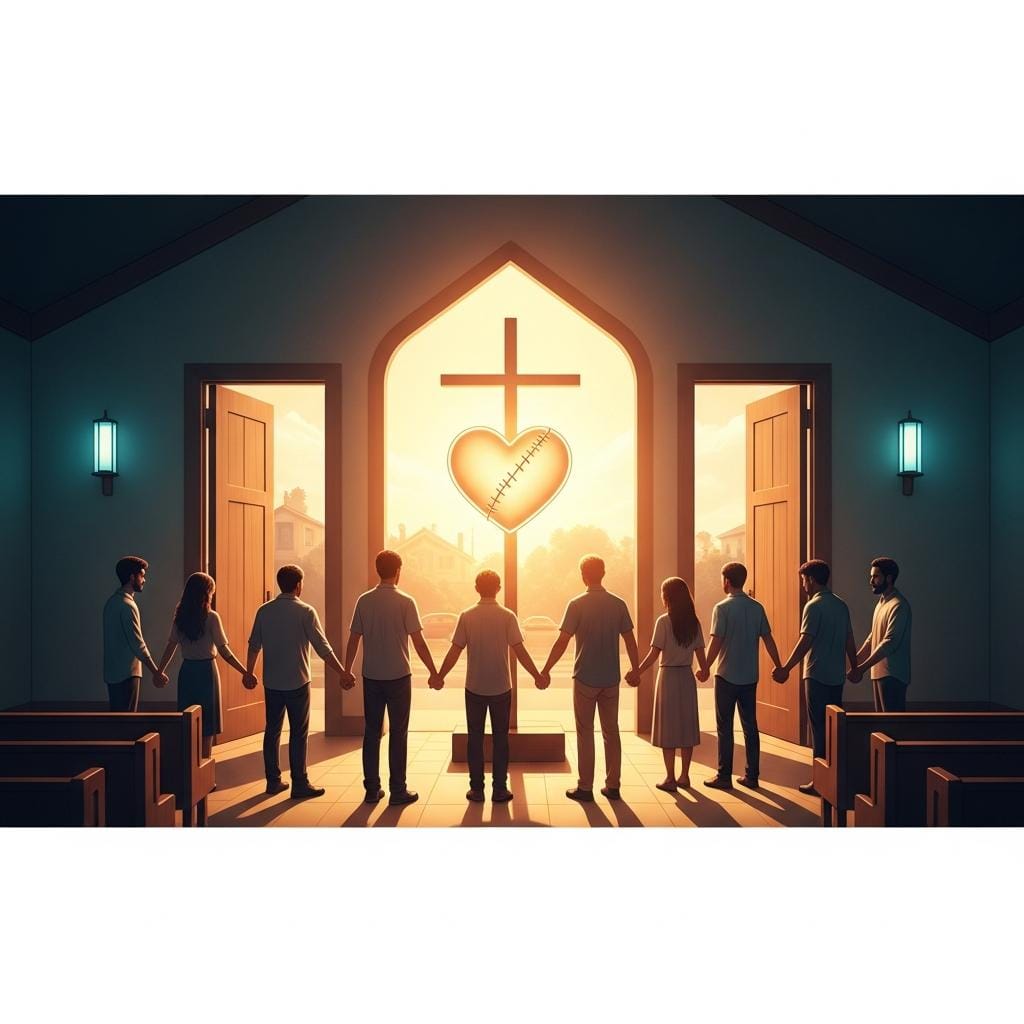
Let’s start where all real change begins: with God’s initiative. The gospel isn’t a moral tune-up; it’s a rescue. It doesn’t polish the surface; it performs heart surgery. Through Christ, God does what we cannot do for ourselves—He gives us a new heart and a new spirit. Ezekiel saw this day coming: “I will give you a new heart, and a new spirit I will put within you” (Ezekiel 36:26).
That means the Christian life is not behavior management; it is rebirth. We are not working our way up to God; He has come down in mercy to lift us into life. When grace moves in, the renovation starts within—new desires, new loves, new power. From that inward renewal, transformation grows outward, touching our habits, our words, and eventually our relationships and communities.
A New Heart, Not a Polished Mask
Self-improvement can sand down rough edges for a season. Grace creates a new creation. Self-effort says, “Try harder.” Grace says, “Behold, I’m making you new.” This is not earned; it’s given. This is not fragile; it’s anchored in the finished work of Jesus.
If you find this post helpful, please support these ministry efforts by buying a copy of my book: The Bible Made Simple and Easy: Book‑by‑Book Summaries of All 66 Books with Visual Aids and Key Verses. Available in the shop and on Amazon. Get your copy today!
Forgiven, Accepted, and Loved: Our Secure Identity in Christ
Grace doesn’t just change our insides; it gives us a new status before God. In Christ, we are forgiven, accepted, and loved. That’s not motivational fluff—it’s blood-bought reality. “There is therefore now no condemnation for those who are in Christ Jesus” (Romans 8:1).
We don’t strive for God’s smile; we stand in it. Our assurance is not a feeling we must maintain; it is a promise we receive. “By grace you have been saved through faith… not a result of works” (Ephesians 2:8–10). Identity in Christ means:
- Forgiveness that silences guilt and shame.
- Acceptance that ends the exhausting audition for approval.
- Love that stabilizes us when circumstances shake.
When we live from this secure place, we discover a paradox: the less we try to “earn” God’s favor, the more our lives begin to change. Grace frees our hearts, and free hearts obey from love, not fear.
Linked Arms: Grace Creates Gospel Community
God doesn’t save isolated heroes; He forms a people. The same grace that unites us to Christ unites us to one another. Scripture calls this the body of Christ—many members, one body (1 Corinthians 12:12–27). We are designed for interdependence, not independence. Your faith was meant to breathe in community—worshiping, praying, serving, and growing together.
Why does God work this way?
- Formation: Community is the workshop of holiness. Other believers help us see blind spots, receive encouragement, and practice patience and love.
- Witness: Our love is meant to be public proof of the gospel (John 13:34–35).
- Perseverance: We’re commanded not to neglect meeting together because endurance is a team sport (Hebrews 10:24–25).
Belonging to a local church is not an optional extra for advanced Christians; it’s ordinary Christianity. Even the strongest believer wilts in isolation. Grace pulls us from the cul-de-sac of individualism into the wide street of connection, partnership, and shared purpose.
Grace That Saves, Grace That Sends
God’s grace doesn’t terminate on us; it travels through us. The same passage that announces salvation by grace also declares that we were “created in Christ Jesus for good works, which God prepared beforehand” (Ephesians 2:8–10).
Notice the order:
- Saved by grace—God’s initiative, not our achievement.
- Secured in identity—no condemnation, assurance in Christ.
- Sent in community—good works prepared by God, pursued with God’s people.
This is the movement arc of healthy discipleship: new heart → new assurance → new family and mission. When a church lives this out, the city gets a living picture of the kingdom: forgiven people becoming a family on mission.
Take Your Place in the Story
If you’re weary, ashamed, or stuck, start here: receive grace. You don’t have to fix yourself to come to Jesus. Come to Jesus to be made new. Then, don’t stop at private devotion—join the family and step into purpose with others. Try these simple practices:
- Plant in a local church: Commit, don’t just attend. Membership says, “I’m here for you, and you’re here for me.”
- Engage a small group: Real transformation requires real relationships—names, faces, shared burdens, and shared joys.
- Serve on a team: Hospitality, kids, music, mercy ministry—find a place where your gifts meet real needs. Purpose grows where people serve side by side.
- Practice everyday interdependence: Ask for prayer. Offer help. Share meals. Celebrate wins. Carry losses. This is how a body works.
- Extend grace outward: Let God’s kindness flow beyond church walls—neighbor well, live justly, speak the hope of the gospel with gentleness and conviction.
For the Heart That Needs Reminding
When condemnation whispers, answer with Scripture. Return to these anchors often:
- Ezekiel 36:26 — New heart, new spirit.
- Romans 8:1 — No condemnation in Christ.
- Ephesians 2:8–10 — Saved by grace, made for good works.
- 1 Corinthians 12:12–27 — One body, many members.
- Hebrews 10:24–25 — Stir up love; don’t neglect meeting together.
- John 13:34–35 — Love one another as a witness.
A Simple Prayer
Father, thank You for initiating, forgiving, and transforming. Give me a new heart that loves what You love. Settle me in the assurance of Your acceptance. Root me in a local church where I can be formed, known, and sent. Use my life—linked with others—to make Your grace visible in my neighborhood and beyond. In Jesus’ name, Amen.
In One Sentence
Grace gives us a new heart, places us in a new family, and sends us on a shared mission. Live it from the inside out—secure in Christ, connected to His people, and committed to His purpose.
Author

Discover more from Elkleaf Publishing
Subscribe to get the latest posts sent to your email.