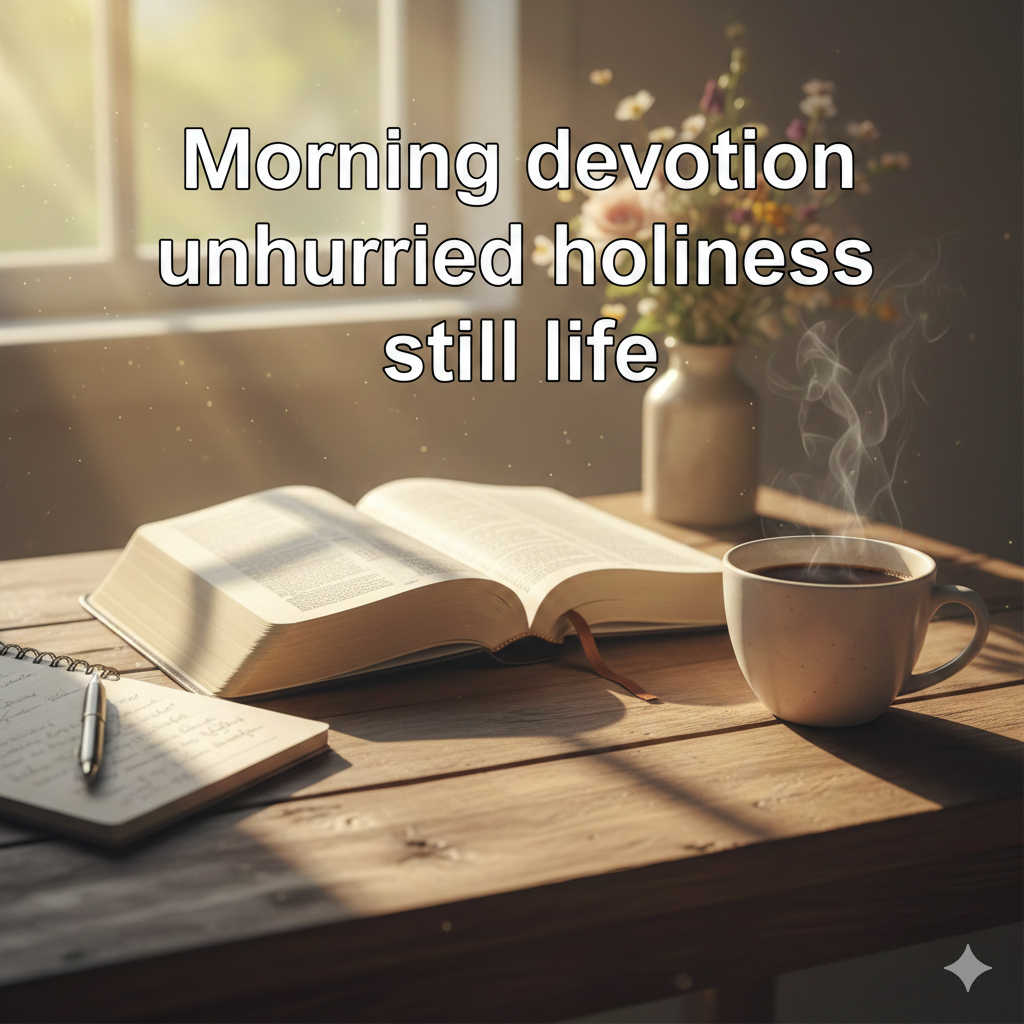
Unhurried Holiness: Patience, Spirit-Led Living, and Wise Witness
Sealed by the Spirit: Unhurried Holiness in a Hurried Age
Sealed and Steady: Identity That Sets Our Pace
Before we talk about pace, we must talk about identity. Scripture says we are sealed by the Spirit—God’s own possession, redeemed to display His glory (Ephesians 1:13–14). That seal isn’t a decorative sticker; it’s a guarantee. We don’t hurry to earn what’s already been given. We walk in step with the One who owns us, loves us, and keeps us.
Paul goes further: the same resurrection power that raised Jesus is at work in believers (Ephesians 1:19–20). That reality produces a non-anxious presence. We don’t need to sprint, panic, or push our way through life. God’s timing is not our enemy; it is our security.
Patience in Three Directions
Paul urges us to “walk in a manner worthy” with humility, gentleness, and patience (Ephesians 4:1–2). That patience is not passive. It’s active obedience in three directions:
- Patience in circumstances: Abraham waited decades for the promised son. He was not perfect in the waiting, yet he learned that the pace of promise is set by the Promiser.
- Patience with people: Gentleness is not weakness; it’s strength under control. Treating difficult people with grace is a sign we trust God to handle what we cannot.
- Patience under God’s plan: We cling to the confidence that all things work together for good for those who love God (Romans 8:28). Trust is the heartbeat of biblical waiting.
When our identity is settled, our pace becomes sane. We can endure delays. We can be gentle with people whose stories are still unfolding. We can obey today without demanding tomorrow’s results.
The Ministry of Measured Words
Our words should move at God’s pace too. Peter’s impulse at the Transfiguration—talking when he should have been listening—reminds us that reverent restraint is sometimes the holiest response (Matthew 17:1–8). The Father’s command was simple: “Listen to Him.” There is a time to speak and a time to be silent. Wisdom knows the difference.
But silence isn’t our only posture. The church is called to “proclaim His excellencies.” Our witness must be marked by truth and grace. Think of a “letter of reference” for a brother or sister with a complicated past. Christians tell the whole truth—we don’t paper over sin—but we also honor redemption. Paul himself knew the sting of failure and the sweetness of restoration. He eventually asked for John Mark, the one who once deserted the work, because he was “very useful” to the ministry (2 Timothy 4:11). That’s integrity with mercy—discernment that refuses both cynicism and naïveté.
When You’re Asked to Vouch for Someone
- Be honest about the past without indulging gossip.
- Test present fruit—look for repentance, consistency, and accountability.
- Honor redemption: celebrate what Jesus has done and is doing.
- Use measured speech: sometimes fewer words, chosen carefully, carry more weight.
Trust Over Panic: The Spirit-Led Pace
The world trains us to equate urgency with importance. Scripture teaches us that God’s Spirit-led pace is often slower—and deeper. The same power that raised Jesus empowers us to respond, not react; to rest, not rush; to move with confidence, not anxiety.
What does that look like on Monday morning?
- Pause to pray before you send the email, enter the meeting, or reply to the text. Ask the Spirit to govern both your pace and your words.
- Prioritize presence over performance metrics. People are not projects; they are image-bearers.
- Refuse the tyranny of immediate results. Faithfulness is our job; outcomes are God’s.
Waiting for the King Without Losing Our Nerve
The church has always lived with an eye on the horizon. We confess Christ will return, and we are called to watchfulness without impatience. The Lord is “not slow” as some count slowness; He is patient, desiring that people come to repentance (2 Peter 3:9). That truth corrects two common errors:
- Panic-prophecy: reading every headline like a countdown clock. We watch, but we don’t spiral.
- Spiritual sleepiness: treating Christ’s delay as permission to drift. We stay ready through holiness, hope, and mission.
Between promise and fulfillment, we practice biblical waiting. Our anticipation is active: prayer, repentance, witness, service. The pace of prophecy is God’s; our part is steady endurance.
Practices for Unhurried Holiness
Here are simple, repeatable steps to align your pace, words, and witness with the Lord’s timing:
- Pray for Spirit-led pacing: “Lord, slow me to Your speed. Lead me by Your Spirit, not my stress.”
- Embrace the patience triad:
- In circumstances: choose endurance over escape.
- With people: meet difficulty with gentleness.
- Under God’s plan: trust that He is weaving all things for good (Romans 8:28).
- Practice wise speech: ask, “Is now the time to speak or to be silent?” If speaking, let your words carry truth and grace.
- Live as God’s possession: you are sealed by the Spirit (Ephesians 1:13–14). Let that identity fuel holiness and a credible Christian witness.
- Keep watch with hope: build rhythms of Scripture, prayer, and service that keep your heart awake as you await the Second Coming.
A Non-Anxious Benediction
Believer, you are not at the mercy of the moment. You belong to the Lord who writes history and numbers hairs. The Spirit has sealed you; resurrection power sustains you; Christ’s return anchors you. So walk worthy: wait well, speak wisely, and witness truthfully. In a frantic age, this unhurried holiness will shine like a steady lighthouse—quiet, confident, and impossible to ignore.
Author

Discover more from Elkleaf Publishing
Subscribe to get the latest posts sent to your email.