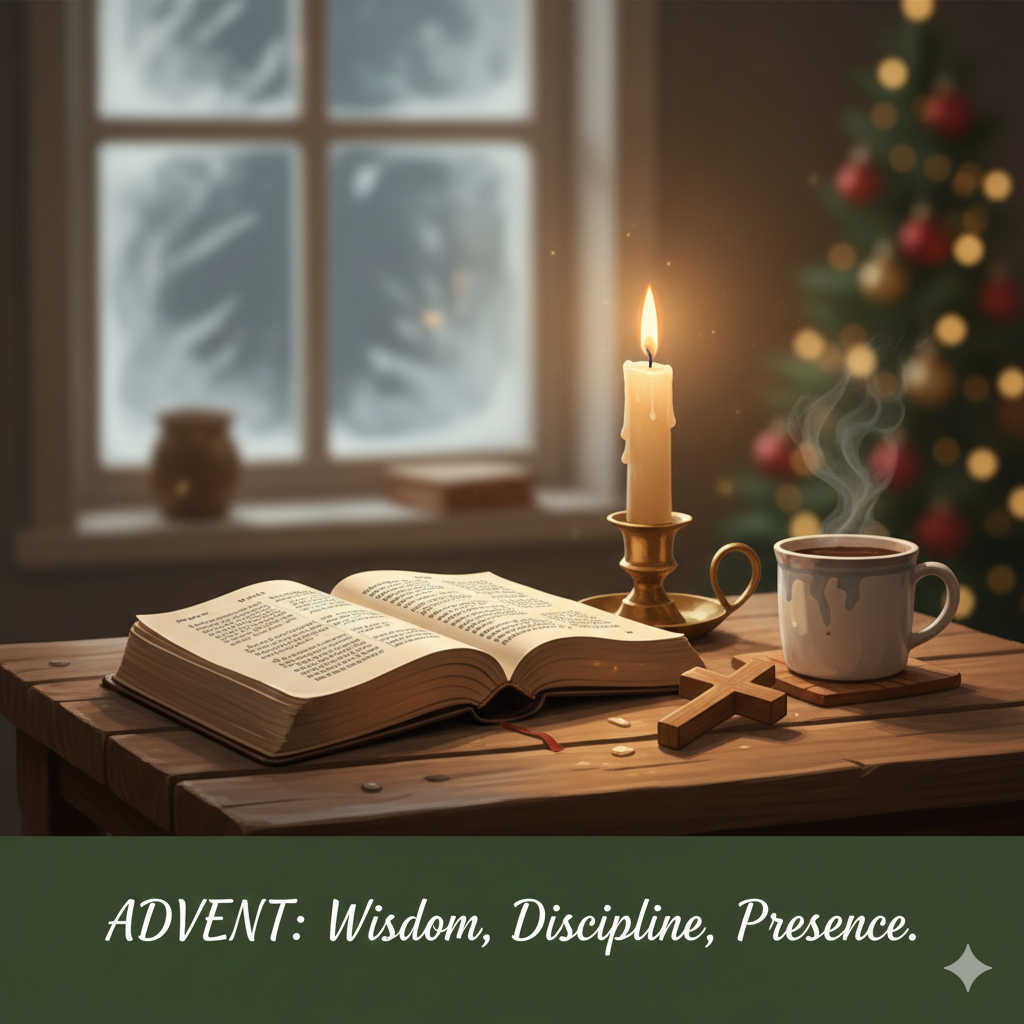
Advent Wisdom for Disciplined Living and Christian Formation
Formed by Wisdom, Fueled by Grace, Secured by Sovereignty
In the midst of Advent season our world speeds up and we might need to utilize Scripture to slow us down. The Gospel tells us that: God dwells with His people. The Word became flesh and pitched His tent among us—glory seen, grace lavished, truth embodied (John 1:14). That reality reframes everything: our daily choices, our resistance to temptation, our endurance through adversity, and our hope for the future. Christian formation (or ‘Sanctification’) is not a self-improvement project but a response to God’s nearness; a life ordered by His wisdom, strengthened by grace, and steadied by His sovereignty.
Stunning Grace and the Nearness of God
We are rarely surprised by judgment. Brokenness begets consequences; everyone sees that. What is shocking—what should stun us anew—is grace. The Holy One does not keep His distance. He dwells with us, tabernacles among us in the incarnate Son, so that sinners might be made saints and wanderers welcomed home.
This nearness is not sentimental; it’s transformational. God’s presence fuels gratitude, humility, and worship. It also ignites holy ambition: because He is near, we can pursue godliness without fear. Because we’ve received mercy, we can extend it. Because Christ came in grace and truth, we can walk in both—robust conviction, warm compassion.
Wisdom for Practical Living in a Hard World
Advent doesn’t remove adversity; it gives us discernment and stability amid it. The wisdom literature promises real, practical benefits for everyday life—clarity in decisions, steadiness in trials, and resilience when storms break. Wisdom is not abstract; it is profoundly practical living shaped by God’s Word and ways. “Trust in the Lord with all your heart… He will make straight your paths” (Proverbs 3:5–6). Read Proverbs 2 and you’ll see the pattern: pursue wisdom, and God grants understanding and protection (Proverbs 2).
Wisdom does not prevent trials; it prepares us for them. It trains our reflexes, equips our speech, tempers our anger, orders our habits, and keeps our feet from evil. It helps us act like the future is real—because it is.
Discipline Toward Godliness: Training on Purpose
Intentional formation is biblical, not trendy. “Train yourself for godliness,” Paul tells Timothy; “for while bodily training is of some value, godliness is of value in every way” (1 Timothy 4:7–8). This isn’t legalism; it’s love that labors. And it is not willpower alone: “His divine power has granted to us all things that pertain to life and godliness” (2 Peter 1:3).
In a culture discipling us toward distraction and compromise, Christians practice spiritual discipline to resist temptation, grow in holiness, and conform to Christ—not the world. Consider a simple Advent rule of life:
- Word before world: Scripture reading and meditation each morning (start with John 1; Psalms; Proverbs).
- Prayer on the hour: Short, honest prayers as each hour passes—gratitude, confession, intercession.
- Fasting from noise: Choose windows each day with no screens; fill them with silence and a Psalm.
- Weekly fellowship: Commit to Lord’s Day worship; add a midweek meal with believers for encouragement.
- Confession and repentance: Keep short accounts with God and neighbor; restore relationships quickly.
- Vigilance at the gates: Guard what you watch, scroll, and say. Ask, “Does this make me more like Christ?”
These habits are not the goal; godliness is. But habits are how we get there—grace-enabled effort that reshapes our loves and our lives through Christian formation.
Providence in Adversity: Trusting God’s Sovereignty
Advent points beyond the manger to the cross and the crown. God’s plan is not fragile; His sovereignty is the ballast we need. Joseph understood this. Betrayed and imprisoned, he could still say, “You meant evil against me, but God meant it for good” (Genesis 50:20). That’s not denial; that’s doctrine applied to pain.
Romans puts it plainly: “For those who love God all things work together for good, for those who are called according to his purpose” (Romans 8:28). Providence doesn’t minimize suffering; it meaningfully locates it in God’s larger story.
How do we live this out?
- Interpret setbacks theologically: Adversity is real; despair is optional. God is at work even when we cannot see it.
- Refuse the false timeline: God’s purposes often ripen slowly. Wait in hope; obedience now bears fruit later.
- Practice faithful presence: Bloom where God has you. Serve in your church, home, and community with steady joy.
- Speak hope to others: Share how God has met you in trouble; comfort with the comfort you’ve received.
A Unified Life: Wisdom, Discipline, and Sovereignty Under Grace
Put it together and you get a robust vision for Christian formation:
- Wisdom shows you how to live—discernment for real decisions and stability in everyday pressures.
- Discipline trains your loves and habits—godliness expressed in practical rhythms and resistance to temptation.
- Sovereignty steadies your heart—trust that your present circumstances serve God’s future promises.
- Grace and Presence make it possible—God dwells with you in Christ, empowering obedience and fueling gratitude.
This is not seasonal self-help. It is Advent realism: Christ has come, Christ is with us, Christ will come again. Until then, we live with clear heads and warm hearts—wise, watchful, and anchored in providence.
Advent Practices
Try one or more of these simple exercises as we move nearer to Christmas. They’re practical, biblical, and doable:
- Presence and Praise: Read John 1:14 daily. Journal where you sense God’s nearness. Add 5 minutes of silent adoration each morning.
- Wisdom and Discernment: Read Proverbs 2 and 3:5–6. Identify one decision you need to make; seek counsel and pray for clarity.
- Discipline and Holiness: Memorize 1 Timothy 4:7–8 and 2 Peter 1:3. Choose one habit to start (daily Scripture) and one habit to stop (late-night doom-scroll).
- Sovereignty and Hope: Meditate on Genesis 50:20 and Romans 8:28. List three hardships. Under each, write how God might be working for good.
A Closing Charge
Christian, you are not at the mercy of the moment. You belong to the God who came near and will come again. Let His stunning grace humble you, His presence comfort you, His wisdom guide you, His discipline form you, and His sovereignty steady you. That’s how we live with discernment in adversity, godliness in our conduct, and unshakeable trust in His purposes—this Advent, and in every season, through the ongoing process of Christian formation.
See This Related Post: Grateful, Holy, Wise: Advent Readiness in a Noisy Season
Author

Discover more from Elkleaf Publishing
Subscribe to get the latest posts sent to your email.